Financing all Credit Types - 
Financing all Credit Types -
Financing all Credit Types -
Financing all Credit Types -
Few things are more stressful than watching your temperature gauge suddenly climb toward the red zone especially after checking the coolant reservoir and seeing that it’s completely full.
At first, it doesn’t make sense.
If there’s enough coolant in the system, why is the engine overheating?
The reality is that coolant level is only one small part of how your cooling system works. Your engine depends on several components working together perfectly to control temperature. If even one component fails like the thermostat, radiator fan, water pump, radiator cap, or cooling fan relay, your engine can overheat even when the coolant reservoir looks perfectly normal.
At Instant Car Fix, our mobile mechanics diagnose overheating problems every single day. One customer recently called us because her SUV overheated only while sitting in traffic. The coolant was full, there were no visible leaks, and the vehicle drove perfectly fine on the highway. The problem turned out to be a failed radiator fan relay that prevented airflow through the radiator at idle.
Another customer kept adding coolant every few days because his car overheated randomly during longer drives. The real problem wasn’t coolant level at all - the thermostat was sticking intermittently and blocking coolant circulation through the radiator.
One of the biggest misconceptions drivers have is believing that “full coolant” automatically means the cooling system is healthy. In reality, coolant only works if it circulates properly, stays pressurized, and transfers heat efficiently throughout the engine and radiator system.
This guide explains:
♦ why cars overheat even with full coolant
♦ how the cooling system actually works
♦ the most common overheating causes
♦ how mechanics diagnose overheating correctly
♦ when the issue becomes serious
♦ and what repairs may be required
If you’re searching for a mechanic near me because your engine temperature keeps climbing, understanding these warning signs can help you avoid catastrophic engine damage.
Your engine creates enormous amounts of heat every time combustion occurs. Without a cooling system, engine temperatures would quickly become high enough to warp metal components, damage seals, and destroy the engine entirely.
The cooling system works by circulating coolant through the engine block and cylinder head, where the coolant absorbs heat generated by combustion. That heated coolant then travels into the radiator, where airflow removes the heat before the coolant circulates back into the engine again.
Several components work together to keep temperatures stable:
♦ thermostat
♦ water pump
♦ radiator
♦ radiator fan
♦ coolant hoses
♦ radiator cap
♦ heater core
♦ coolant temperature sensors
If even one of these components fails, coolant circulation or heat transfer may become compromised even though the coolant reservoir still appears full.
That’s why overheating diagnosis is often more complicated than simply checking coolant level.
Read:
Car overheating - causes and symptoms
And:
Car smells like coolant but is not overheating
The thermostat is one of the most common reasons a car overheats despite having full coolant.
The thermostat controls coolant flow between the engine and radiator. When the engine is cold, the thermostat stays closed so the engine can warm up faster. Once operating temperature is reached, the thermostat opens and allows coolant to circulate through the radiator.
If the thermostat sticks closed:
coolant circulation becomes severely restricted.
The engine temperature rises rapidly because hot coolant becomes trapped inside the engine.
Common thermostat symptoms include:
♦ overheating shortly after startup
♦ fluctuating temperature gauge
♦ heater blowing cold air
♦ upper radiator hose staying cool
♦ random overheating spikes
One customer’s Nissan Altima overheated every morning within ten minutes of driving. The coolant reservoir was completely full and there were no leaks. Testing revealed the thermostat was only partially opening, severely restricting coolant flow.
Another customer replaced the radiator, coolant reservoir, and hoses before discovering the real problem was a thermostat stuck nearly shut.
Read:
Car dies when hot and restarts later
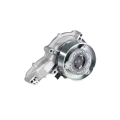
The water pump is essentially the heart of the cooling system.
Its job is to circulate coolant continuously through the engine and radiator. If the water pump fails, coolant movement slows dramatically or stops entirely.
Even with full coolant:
the engine will still overheat if coolant is not moving correctly.
Water pumps commonly fail because of:
♦ worn bearings
♦ damaged impellers
♦ internal corrosion
♦ seal leaks
♦ belt problems
Common water pump symptoms include:
♦ overheating at highway speeds
♦ whining noises
♦ coolant leaks near the pump
♦ weak cabin heat
♦ steam from the engine bay
One customer’s Ford Explorer only overheated during highway driving but stayed perfectly normal in city traffic. The issue turned out to be a damaged water pump impeller that could no longer circulate coolant efficiently at higher engine loads.
Another customer ignored a whining noise for weeks before the water pump bearing failed completely, causing sudden overheating during rush hour traffic.
Read:
Why your RPM's fluctuate while driving
Air trapped inside the cooling system can prevent coolant from circulating properly.
This commonly happens after:
♦ coolant flushes
♦ radiator replacement
♦ thermostat replacement
♦ overheating repairs
♦ hose replacement
Air pockets create areas where coolant cannot absorb heat efficiently. In some cases, trapped air prevents the thermostat from opening correctly.
Common symptoms include:
♦ random overheating
♦ temperature fluctuations
♦ heater blowing cold air
♦ bubbling coolant reservoir
♦ gurgling sounds behind dashboard
One customer replaced his radiator himself and couldn’t figure out why the engine still overheated afterward. The cooling system simply hadn’t been bled correctly, leaving trapped air around the thermostat housing.
Air pockets are surprisingly common after DIY cooling-system repairs.
Cooling fans become extremely important during:
♦ traffic
♦ idling
♦ hot weather
♦ stop-and-go driving
At highway speeds, natural airflow cools the radiator. But at idle, the cooling fans must pull air through the radiator to remove heat.
If the fan stops working:
overheating often occurs only in traffic.
Common cooling fan problems include:
♦ bad fan motor
♦ blown fuse
♦ failed relay
♦ wiring issues
♦ bad temperature sensor
A customer recently called us because her Honda Civic overheated every time she sat in a drive-thru but cooled down immediately once moving again. The radiator fan motor had failed completely.
Another driver noticed his AC stopped blowing cold air shortly before the overheating began. The failed cooling fan was affecting both the AC condenser and radiator airflow simultaneously.
Read:
Car dies while driving
Radiators can become restricted internally or externally over time.
Internally, coolant passages clog because of:
♦ rust
♦ corrosion
♦ old coolant deposits
♦ mineral buildup
Externally, dirt and debris can block airflow through the radiator fins.
Either problem reduces heat transfer efficiency and allows engine temperatures to rise.
Common symptoms include:
♦ overheating at highway speeds
♦ recurring overheating during hot weather
♦ weak cooling performance
♦ uneven radiator temperatures
Older vehicles are especially vulnerable when coolant hasn’t been serviced regularly.
One customer’s truck repeatedly overheated while towing despite having full coolant and a new thermostat. The radiator was heavily clogged internally and could no longer dissipate heat effectively under load.
Many drivers underestimate how important the radiator cap actually is.
The cooling system must stay pressurized to raise coolant boiling temperature. If the radiator cap fails, coolant may boil prematurely and create steam pockets that reduce cooling efficiency dramatically.
A faulty radiator cap may cause:
♦ overheating
♦ bubbling coolant reservoir
♦ coolant overflow
♦ coolant smell
♦ steam from overflow tank
Fortunately:
radiator caps are relatively inexpensive.
But ignoring a failing radiator cap can still lead to serious overheating problems over time.
A blown head gasket is one of the most serious overheating causes.
The head gasket seals:
♦ combustion chambers
♦ coolant passages
♦ oil passages
When it fails, combustion gases can enter the cooling system and create overheating even when coolant appears full.
Common head gasket symptoms include:
♦ white exhaust smoke
♦ bubbling coolant
♦ disappearing coolant
♦ rough engine performance
♦ milky engine oil
♦ overheating under load
One customer’s Subaru Outback repeatedly overheated despite multiple coolant top-offs. Pressure testing eventually confirmed combustion gases entering the cooling system from a failing head gasket.
Another customer continued driving while overheating for several weeks before finally warping the cylinder head and turning a moderate repair into a complete engine rebuild.
Read:
Why your engine misfires under acceleration
The heater core is also part of the cooling system.
If it becomes clogged, coolant circulation may become restricted and overheating can occur.
One major clue is:
overheating combined with weak or cold cabin heat.
If your heater suddenly stops producing warm air while the engine overheats, circulation problems are highly likely.
Many drivers ignore heater performance changes without realizing they are often early cooling-system warning signs.
Coolant hoses weaken internally with age.
Sometimes hoses collapse under suction while driving, restricting coolant flow even though the outside of the hose still appears normal.
This commonly causes:
♦ overheating at highway speeds
♦ overheating during acceleration
♦ inconsistent temperature spikes
Lower radiator hoses are especially vulnerable because they experience stronger suction forces from the water pump.
Sometimes the engine isn’t actually overheating at all.
A faulty coolant temperature sensor or temperature gauge can falsely indicate overheating even when temperatures remain normal.
Possible signs include:
♦ sudden gauge spikes
♦ no steam or coolant smell
♦ normal engine performance
♦ inconsistent temperature readings
This is why proper diagnostics matter before replacing expensive components unnecessarily.
Engine oil also helps remove heat from internal engine components.
If oil levels become critically low, friction and heat increase dramatically inside the engine.
Always verify:
♦ oil level
♦ coolant condition
♦ coolant circulation
♦ fan operation
during overheating diagnosis.
Some overheating problems actually involve multiple systems failing simultaneously.
If your temperature gauge climbs toward the red:
♦ turn off the AC
♦ turn on the heater
♦ pull over safely
♦ shut the engine off
♦ allow the engine to cool fully
Never remove the radiator cap while the engine is hot.
Pressurized coolant can cause severe burns.
Ignoring overheating can quickly lead to:
♦ warped cylinder heads
♦ blown head gaskets
♦ cracked engine blocks
♦ damaged pistons
♦ complete engine failure
Even a single severe overheating event can permanently damage modern engines.
At Instant Car Fix, our mobile mechanics diagnose overheating issues directly at:
♦ homes
♦ offices
♦ parking garages
♦ apartment complexes
♦ roadside locations
We perform:
♦ cooling system pressure testing
♦ thermostat diagnosis
♦ radiator fan testing
♦ coolant leak inspections
♦ overheating diagnostics
♦ water pump inspections
♦ radiator testing
without requiring a tow truck or repair shop visit.
One major advantage of mobile diagnostics is that mechanics can often inspect the vehicle in the same conditions where overheating actually occurs whether that’s sitting in traffic, idling in a parking lot, or overheating after longer drives.
Read:
13 signs of a bad car battery
And:
Signs of a bad alternator
Many overheating issues can be prevented with regular maintenance.
Helpful preventative maintenance includes:
♦ coolant flushes
♦ hose inspections
♦ radiator cleaning
♦ thermostat replacement
♦ radiator cap replacement
♦ cooling fan inspections
Most cooling system failures provide warning signs before major breakdowns occur. Catching problems early usually prevents much larger repair bills later.
Ignoring small coolant leaks or occasional temperature spikes often leads to much more expensive repairs down the road.


A full coolant reservoir does not guarantee proper coolant circulation. Problems like bad thermostats, failing water pumps, clogged radiators, or cooling fan failures can still cause overheating even when coolant appears full.
Yes. A thermostat that sticks closed prevents coolant from flowing through the radiator properly. This traps heat inside the engine and causes temperatures to rise rapidly.
This usually points toward a cooling fan problem. At idle, the radiator depends heavily on cooling fans because there isn’t enough natural airflow passing through the radiator.
Absolutely. Air pockets prevent coolant from circulating through important engine passages properly. This often happens after cooling system repairs when the system hasn’t been bled correctly.
Yes. Engine oil helps reduce friction and remove heat from moving engine parts. Low oil levels increase heat buildup and can contribute to overheating problems.
This often points toward coolant circulation problems. A bad thermostat, air pockets, or restricted coolant flow may prevent hot coolant from reaching the heater core.
Yes. The radiator cap helps maintain cooling-system pressure, which raises coolant boiling temperature. A weak cap can allow coolant to boil too early and reduce cooling efficiency.
Continuing to drive an overheating vehicle can severely damage the engine. Overheating may warp cylinder heads, damage pistons, blow the head gasket, or crack the engine block.
Yes. Mobile mechanics can inspect thermostats, water pumps, cooling fans, radiators, and complete cooling systems directly at your home, office, or parking lot.
If your car overheats even though the coolant is full, Instant Car Fix mobile mechanics can diagnose the problem directly at your home, office, or parking lot. We inspect thermostats, water pumps, radiators, cooling fans, coolant circulation issues, and complete cooling systems without requiring a tow truck or repair shop visit.

Very skilled and prompt on site and the truck starts up fine with new starter- highly recommend him for future repairs


Had a leaky fuel rail, tech came out same day and fixed it asap, very professional and very easy to get work done.

The mechanic was very pleasant, got to work immediately, knew what he was doing and completed the battery replacement quickly. I was impressed.

Prompt service, very helpful in diagnosing whether I had the right parts. Have great advice on when to change the parts again. Would recommend to anyone who needs mechanic support

Needed a car battery changed. Set up the appointment and they had someone out the very next day. The mechanic did a great job making it happen. Very much appreciated.

From start to finish the whole process was smooth and easy. The website was easy to navigate and when I called for additional assistance I was helped immediately and there was no pushing me to purchase additional services. The mechanics arrived on time, asked good questions, and worked quickly. Very polite and helpful. I was glad I chose this company.

Adam was great! I was skeptical at first, but glad I booked. 10/10 definitely will book again when I need services done on my vehicle.

They were prompt in getting a mechanic to us. Clark’s Mobile Repair showed up. Immediately fixed the problem. He was very professional

Instant Car fix saved the day, the tech was knowledgeable and efficient and knew exactly what was needed. Definitely recommend for my BMW F32.

Very skilled and prompt on site and the truck starts up fine with new starter- highly recommend him for future repairs
Had a leaky fuel rail, tech came out same day and fixed it asap, very professional and very easy to get work done.
The mechanic was very pleasant, got to work immediately, knew what he was doing and completed the battery replacement quickly. I was impressed.
Prompt service, very helpful in diagnosing whether I had the right parts. Have great advice on when to change the parts again. Would recommend to anyone who needs mechanic support
Needed a car battery changed. Set up the appointment and they had someone out the very next day. The mechanic did a great job making it happen. Very much appreciated.
From start to finish the whole process was smooth and easy. The website was easy to navigate and when I called for additional assistance I was helped immediately and there was no pushing me to purchase additional services. The mechanics arrived on time, asked good questions, and worked quickly. Very polite and helpful. I was glad I chose this company.
Adam was great! I was skeptical at first, but glad I booked. 10/10 definitely will book again when I need services done on my vehicle.
They were prompt in getting a mechanic to us. Clark’s Mobile Repair showed up. Immediately fixed the problem. He was very professional
Instant Car fix saved the day, the tech was knowledgeable and efficient and knew exactly what was needed. Definitely recommend for my BMW F32.