Financing all Credit Types - 
Financing all Credit Types -
Financing all Credit Types -
Financing all Credit Types -
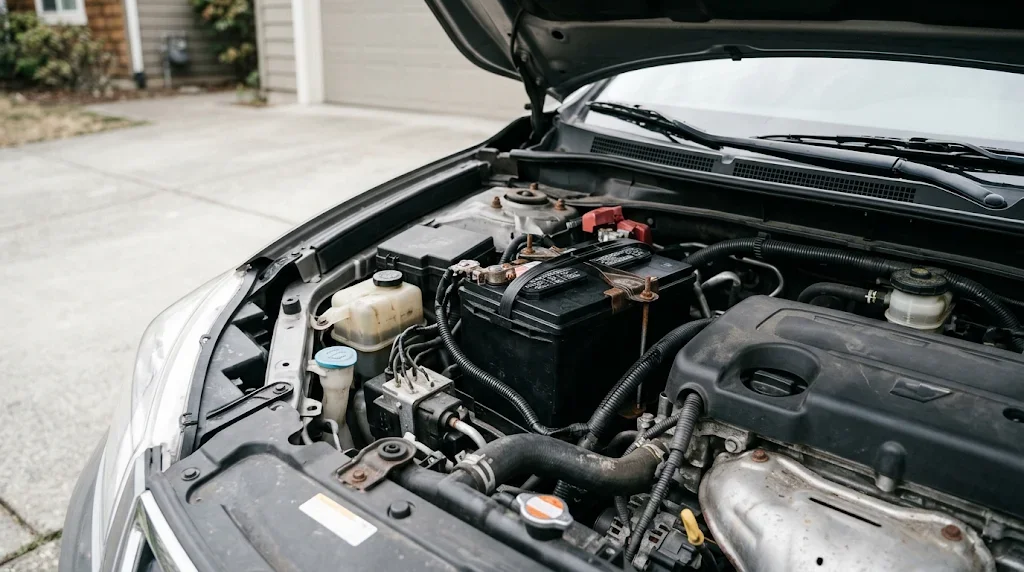
Replacing a car battery does not automatically mean the whole car needs reprogramming. Depending on the vehicle, you may need to restore a few settings, complete a battery-management procedure, or allow certain systems to relearn. Those are different jobs, even though people often call all of them a "reset."
This guide covers the vehicle's 12-volt battery, not a hybrid or electric vehicle's high-voltage traction battery. Start with the instructions for your exact model and year. A reset sequence from a different car may not apply to yours.
Before changing settings, note what stopped working after the battery replacement. Did the clock lose its time? Did a window lose one-touch operation? Is there a warning message, rough idle, or a no-start condition? Tell the installer when the problem began and keep a photo of any messages.
Do not assume every new symptom is a normal relearn. The mechanic should first confirm that the replacement matches the vehicle's requirements and that the installation is correct. Our battery replacement service page explains the broader testing and installation service; the steps below concern what may need attention afterward.
Power loss can erase clock settings and radio presets. Some vehicles also need their automatic windows reinitialized, including the window's bounce-back or anti-pinch function. Restoring those features is not the same as programming the engine computer.
Use the owner's manual section for the affected feature. Follow the exact window procedure rather than holding a switch for an arbitrary number of seconds. If a window still behaves incorrectly, have it checked instead of repeatedly forcing it to close.
Some vehicles require a replacement battery to be registered with the battery-management system. This records that a new battery has been installed. Depending on the vehicle and the approved replacement, changing battery capacity or technology may require an additional coding or adaptation procedure.
BMW service information provides a useful example: a specified replacement procedure distinguishes registering a same-capacity battery from the extra work required for an approved capacity upgrade. It is not a rule for every BMW, much less every car.
Ask the installer, "Does this vehicle require battery registration, coding, or a battery-sensor reset, and was it completed?" A car starting successfully does not establish that a required registration step was done. Nor does clearing warning codes substitute for that procedure.
Battery registration and relearning the state of charge are not interchangeable. One tells the system about the replacement; the other lets it learn the battery's charge condition.
A Ford owner-manual example includes a battery-sensor reset and separately describes eight hours of locked, ignition-off sleep for state-of-charge relearning after replacement or, in some cases, charging. Certain electrical features may be temporarily unavailable during that process.
That eight-hour instruction is model-specific, not a universal waiting period. Check your own manual before assuming the vehicle needs a scan tool, an overnight rest, or a drive. The required procedure depends on your vehicle.
Some vehicles may need to relearn idle or fuel-trim settings after battery power is interrupted. Ford manuals illustrate how those instructions differ by vehicle. Do not borrow another model's pedal sequence or treat stalling as something you must simply drive through.
Battery disconnection can also reset emissions-readiness monitors. These record whether the vehicle has completed particular emissions-system checks. A car can start and have no illuminated check-engine light while its monitors are still "not ready."
If an emissions inspection is due, tell the installer before the work. Ask how to check readiness afterward and follow the vehicle-specific instructions. Do not rely on a promised mileage or driving time. Disconnecting the battery again or clearing codes can restart the readiness process rather than help it finish.
A lost clock setting is different from a car that stalls or will not start. Persistent warnings, rough running, or a new electrical fault need assessment. If the car stalls, stop using it until it can be assessed safely; do not attempt a relearn drive to see whether it clears.
Ask the mechanic to check the installation and relevant fault information before clearing anything. Loose or poor connections can also need attention; our battery-terminal service page covers that separate concern. If the replacement battery repeatedly goes flat, our guide to why a car battery keeps dying explains why a reset alone may miss the underlying problem.
Before the visit ends, ask what was completed, what you need to restore yourself, and which symptoms mean you should call back. A clear answer is more useful than being told that "the computer will reset itself."


Possibly. Clock and radio settings, automatic windows, battery-management functions, or learned engine settings may need attention. The required steps depend on the vehicle. Use its owner's manual and ask the installer what applies.
There is no universal whole-car reset. Identify the affected feature first. Restoring a window function, registering a replacement battery, and allowing emissions monitors to run are separate processes with different instructions.
Not automatically. Some vehicles require battery registration or coding; others have different requirements. Ask the installer to check the manufacturer's procedure rather than assume every battery replacement needs computer programming.
Follow the exact power-window initialization or bounce-back procedure in your owner's manual. Switch sequences and conditions vary. If the procedure does not restore correct operation, have the window checked rather than bypassing its safety function.
Check whether the readiness monitors have completed before returning for inspection. Follow the vehicle's instructions and your local inspection program's requirements. Clearing codes or disconnecting the battery again can reset readiness; it does not repair an emissions fault.
Check whether your vehicle specifies an idle relearn and follow that procedure. Do not use a generic sequence or drive a stalling car to force learning. Persistent rough idle or stalling should be assessed.
There is no single time. Restoring settings, battery-state relearning, and emissions-readiness checks have different requirements. Confirm the specific process with the installer; the engine starting does not prove that every required step is complete.
Share your vehicle details, warning messages and what changed after the replacement to request an assessment.

My mobile mechanic Donny was fantastic. He arrived promptly, diagnosed the issue right away, and replaced my battery quickly and efficiently. He’s extremely knowledgeable and clearly an expert in his field. I really appreciated his professionalism and the smooth experience from start to finish. I would gladly use his services again and highly recommend him to anyone needing reliable mobile auto repair.


Sergio fixed the car really fast and it drives and sounds much better than before. I would recommend having him fix any car again

Dustin did a fantastic job getting my broken bolt out fast and efficiently. I can now continue my project. Thank you!

Although there was some confusion about our appointment window. I found customer service to be extremely helpful. My only suggestion would be that there is the opportunity to chat with the actual mechanic. I was arranging service for my father, who’s out of town and had some memory issues, so it would’ve made it much easier to coordinate and understand if I could chat with the mechanic.

Used this site first time and got good results,mechanic came on time ,did all testing and diagnostic,found out our battery not working right.We happy with service.

Needed a subframe cradle replaced for a 2014 Dodge Charger 5.7. Left the mechanic this morning. I had to go to work. Got back from work. Checked on my vehicle turned it on, and no more engine vibration inside my cabin. Job well done. Thank you.

Mr. Jimmy is great and very good with his work. I would recommend him again to do the work. Thank you!

Jelson monterrosa and Adrian gee Did a fantastic job work , quick and efficient , and i'm very happy with the work they did to my vehicle definitely would call them again They were absolutely the best

Somewhat hesitant as it was a website I had never used before, but the mechanic came out. Performed the service, quick and efficient and good to go.

My mobile mechanic Donny was fantastic. He arrived promptly, diagnosed the issue right away, and replaced my battery quickly and efficiently. He’s extremely knowledgeable and clearly an expert in his field. I really appreciated his professionalism and the smooth experience from start to finish. I would gladly use his services again and highly recommend him to anyone needing reliable mobile auto repair.
Sergio fixed the car really fast and it drives and sounds much better than before. I would recommend having him fix any car again
Dustin did a fantastic job getting my broken bolt out fast and efficiently. I can now continue my project. Thank you!
Although there was some confusion about our appointment window. I found customer service to be extremely helpful. My only suggestion would be that there is the opportunity to chat with the actual mechanic. I was arranging service for my father, who’s out of town and had some memory issues, so it would’ve made it much easier to coordinate and understand if I could chat with the mechanic.
Used this site first time and got good results,mechanic came on time ,did all testing and diagnostic,found out our battery not working right.We happy with service.
Needed a subframe cradle replaced for a 2014 Dodge Charger 5.7. Left the mechanic this morning. I had to go to work. Got back from work. Checked on my vehicle turned it on, and no more engine vibration inside my cabin. Job well done. Thank you.
Mr. Jimmy is great and very good with his work. I would recommend him again to do the work. Thank you!
Jelson monterrosa and Adrian gee Did a fantastic job work , quick and efficient , and i'm very happy with the work they did to my vehicle definitely would call them again They were absolutely the best
Somewhat hesitant as it was a website I had never used before, but the mechanic came out. Performed the service, quick and efficient and good to go.