Financing all Credit Types - 
Financing all Credit Types -
Financing all Credit Types -
Financing all Credit Types -
You hop in the car. Maybe you’re already late for work. Maybe it’s freezing outside. Maybe you just finished grocery shopping and the trunk is full.
You turn the key…
Click.
Or worse:
Click-click-click-click-click.
And suddenly your car won’t start.
Honestly, it’s one of the most frustrating car problems because it always seems to happen at the worst possible time.
And the weird part?
A lot of the time the lights still come on.
The dashboard lights up.
The radio works.
Maybe even the AC blower turns on.
So naturally people think:
“Well the battery can’t be dead.”
But that’s actually one of the biggest misconceptions we see.
The good news is this:
A clicking sound usually narrows the problem down pretty quickly.
Most of the time, the issue ends up being:
♦ a weak battery
♦ bad battery connection
♦ failing starter
♦ alternator issue
♦ or electrical grounding problem
And honestly?
About 8 out of 10 times, it’s battery-related.
But not always.
This guide breaks down:
♦ what the clicking means
♦ how to tell battery vs starter problems apart
♦ what mechanics usually check first
♦ repair costs
♦ real-world examples
♦ and when to stop trying to start the car before you make things worse.
This matters more than people realize.
Because different clicks usually point toward completely different problems.
This is the classic:
“battery doesn’t have enough power” sound.
You turn the key and the car sounds like a machine gun trying to start.
Usually caused by:
♦ weak battery
♦ dead battery
♦ corroded battery terminals
♦ loose battery cables
♦ charging system issue
This is BY FAR the most common version.
Especially during:
♦ winter
♦ heat waves
♦ after a vehicle sits for a few days
♦ or when a battery gets older.
If your battery keeps dying repeatedly, you may need a professional car battery replacement or a complete charging system inspection.
This usually points more toward:
♦ bad starter
♦ starter solenoid issue
♦ seized starter
♦ bad electrical ground
The lights may still come on normally.
The dashboard may look completely fine.
But the engine doesn’t crank at all.
A lot of drivers immediately assume:
“My engine blew up.”
Thankfully, that’s rarely the case.
If your engine won’t crank at all, check out our guide on bad starter symptoms.
This is the big one.
And honestly?
If your battery is over 4 years old, we’d probably start there first.
Your starter motor needs a huge burst of power to crank the engine.
Way more than what’s needed to power your headlights or radio.
That’s why:
♦ lights can work
♦ dashboard can work
♦ electronics can work
…while the car still refuses to start.
♦ Rapid clicking
♦ Slow crank before failure
♦ Dim headlights
♦ Dashboard flickering
♦ Needing frequent jump starts
♦ Clicking more in cold weather
We see this constantly once temperatures drop.
A battery that barely survived summer suddenly gives up the first cold morning of winter.
Honestly, usually one of these:
♦ age
♦ extreme heat
♦ extreme cold
♦ short trips
♦ bad alternator
♦ leaving lights on
♦ corroded terminals
Modern cars also have WAY more electronics than older vehicles.
That extra load adds up over time.
If your battery keeps dying overnight, you may have a parasitic battery drain issue.
Here’s the part that throws a lot of people off:
Sometimes the battery itself is perfectly fine.
But the terminals are so corroded the power can’t get through properly.
You’ll usually notice:
♦ white buildup
♦ blue-green corrosion
♦ loose connections
Even a small amount of corrosion can create enough electrical resistance to prevent the starter from getting proper current.
We’ve had customers convinced they needed a starter replacement…
and the whole issue ended up being dirty terminals.
Open the hood and look directly at the battery terminals.
If they look:
♦ crusty
♦ fuzzy
♦ heavily corroded
♦ loose
…there’s a decent chance you already found the issue.
If corrosion keeps returning, your battery itself may be failing internally and need a mobile battery replacement service.
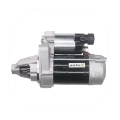
If the battery checks out, the starter becomes the next likely suspect.
The starter motor physically turns the engine when you start the vehicle.
Over time they wear out.
Especially on:
♦ high-mileage vehicles
♦ delivery vehicles
♦ rideshare cars
♦ stop-and-go commuter cars
♦ Single loud click
♦ No engine crank
♦ Intermittent starting
♦ Grinding noise
♦ Burning smell
♦ Vehicle starts sometimes but not others
That intermittent part is what confuses people.
The car may randomly start perfectly later.
Then fail again tomorrow.
That doesn’t mean the problem fixed itself.
Usually it means:
the starter is slowly dying.
Honestly, people replace starters way too quickly sometimes.
We’ve seen cars towed in for “starter replacement” where the actual problem was:
♦ loose battery cable
♦ weak battery
♦ bad ground
♦ corroded terminal
Proper diagnosis matters.
That’s why we always recommend a full electrical diagnostic inspection before replacing expensive parts.
The starter solenoid acts like a heavy-duty electrical switch.
Its job is to:
♦ engage the starter gear
♦ send battery power to the starter motor
When it fails:
♦ the starter doesn’t receive enough power
♦ you hear clicking
♦ engine doesn’t crank
On many modern vehicles:
the solenoid is integrated into the starter assembly itself.
This is where a LOT of people waste money replacing batteries unnecessarily.
A bad alternator can absolutely cause clicking and no-start problems.
Why?
Because the alternator charges the battery while the engine runs.
If the alternator fails:
the battery slowly drains over time until eventually the vehicle won’t start.
♦ Battery keeps dying repeatedly
♦ Car starts after jump but dies again later
♦ Headlights dim while driving
♦ Battery warning light comes on
♦ Electronics flicker randomly
♦ Problems get worse over time
This catches people off guard constantly.
They replace the battery…
everything seems fine for a week or two…
then the same issue comes back.
Learn more about:
We recently had a customer with an F-150 that kept dying even after installing a brand-new battery.
At first glance:
everything looked normal.
But once we tested the charging system properly:
the alternator output was inconsistent and dropping under load.
The old alternator had slowly damaged the previous battery too.
So now:
♦ the old battery was dead
♦ AND the alternator was failing.
That combination is way more common than people realize.
This one gets overlooked constantly.
Your vehicle relies on multiple grounding points to complete electrical circuits.
If a ground strap becomes:
♦ loose
♦ corroded
♦ damaged
…you can get:
♦ clicking
♦ intermittent starting
♦ weird electrical behavior
Sometimes:
everything technically tests “good”
but the current still can’t flow properly through the system.
These can be annoying to diagnose because the symptoms mimic starter failure almost perfectly.
Sometimes the issue is surprisingly small.
A failed:
♦ starter relay
♦ ignition relay
♦ fuse
…can stop the starter from engaging properly.
Thankfully, these are usually cheaper repairs compared to replacing a starter or alternator.
Modern vehicles have pretty sophisticated anti-theft systems now.
If the car doesn’t recognize:
♦ the key
♦ key fob
♦ transponder chip
…it may prevent the vehicle from starting entirely.
You may hear:
♦ clicking
♦ relay noise
♦ or nothing at all.
This is especially common after:
♦ key fob battery failure
♦ electrical work
♦ battery replacement
♦ water intrusion issues
Some vehicles are simply more prone to these issues than others.
Common issues:
♦ starter wear
♦ battery corrosion
♦ weak batteries in cold weather
♦ ground issues
Especially on trucks running:
♦ aftermarket lighting
♦ audio systems
♦ plows
♦ heavy electrical accessories
We commonly see:
♦ parasitic battery drains
♦ battery failures
♦ grounding issues
♦ intermittent starter problems
Some of these trucks slowly drain the battery overnight without owners realizing it.
Usually:
♦ starter wear
♦ relay problems
♦ aging batteries
The tricky part is Hondas often become intermittent before failing completely.
European cars can get extremely sensitive to weak batteries.
A battery that would still start a Toyota may cause:
♦ voltage faults
♦ immobilizer problems
♦ clicking/no-start issues
in a BMW.
Very common:
♦ grounding problems
♦ electrical gremlins
♦ TIPM-related issues
♦ intermittent no-start conditions
Especially on modified Jeeps.
Are they:
♦ dim?
♦ flickering?
♦ normal brightness?
Dim lights usually point toward battery problems.
If the car starts immediately with a jump:
the battery or charging system is probably the issue.
But here’s something important:
A successful jump start does NOT automatically mean the battery itself is bad.
Could still be:
♦ alternator problem
♦ parasitic drain
♦ bad connection
If you need immediate help, our mobile mechanic service can come directly to your location.
Seriously.
People sit there turning the key over and over hoping the car magically starts.
Bad idea.
You can:
♦ overheat the starter
♦ damage wiring
♦ completely kill the battery
We’ve seen people turn a small issue into a much bigger repair doing this.
If you notice:
♦ corrosion
♦ loose cables
♦ buildup
…cleaning the terminals may actually solve the issue immediately.
Usually:
$150-$350
Depends on:
♦ battery type
♦ vehicle
♦ AGM vs standard battery
Usually:
$350-$900
Luxury vehicles can cost significantly more.
Usually:
$400-$1,200
Access difficulty matters a lot here.
Usually:
$50–$150
Usually:
$50-$200
Absolutely.
Cold weather destroys weak batteries.
A battery that barely survives summer often completely fails during the first major cold snap.
That’s why every winter we suddenly get flooded with:
“my car clicks but won’t start”
calls.
Yep.
Extreme heat actually shortens battery lifespan significantly.
A lot of batteries get damaged during summer…
then finally fail in winter.
We had a BMW customer who visited multiple shops for intermittent clicking and no-start issues.
Battery tested fine.
Starter tested fine.
The actual problem?
A badly corroded engine ground hidden underneath a cover.
Tiny connection.
Huge problem.
That’s why proper electrical diagnosis matters.
This is important:
If your car:
♦ clicks occasionally
♦ starts after multiple tries
♦ struggles randomly
…it’s warning you BEFORE total failure happens.
Most people ignore it until:
♦ they’re stranded at work
♦ stuck at a gas station
♦ late for something important
♦ or calling for a tow truck in bad weather.
Honestly, prevention here is pretty simple.
If your battery is:
4+ years old
…pay attention to it.
Especially before winter.
A tiny amount of corrosion can create surprisingly big electrical problems.
Things like:
♦ slow starts
♦ dim lights
♦ battery warning light
♦ intermittent clicking
…almost always get worse.
A quick alternator output test can save you from a breakdown later.
If you suspect charging issues, schedule a charging system diagnostic before the problem leaves you stranded.
A clicking no-start issue feels stressful in the moment, but most of the time the root cause is very fixable.
The key is:
♦ diagnosing it properly
♦ avoiding random part replacement
♦ and addressing the issue before you end up completely stranded.
At Instant Car Fix, we diagnose and repair:
♦ dead batteries
♦ starter failures
♦ alternator problems
♦ electrical no-start conditions
♦ charging system issues
directly at your location.
Whether your car is stuck:
♦ at home
♦ at work
♦ in a parking garage
♦ or stranded somewhere inconvenient
…our mobile mechanics can help get you back on the road quickly.
Because honestly?
That little clicking sound usually starts as a warning before it becomes a much bigger problem later.


This is one of the most common situations drivers run into, and honestly it throws a lot of people off. They assume the battery must be fine because the headlights, dashboard, or radio still turn on. But starting your engine requires far more electrical power than running basic electronics.
Your battery may still have enough voltage to power the lights while lacking the amperage needed to crank the starter motor. In most cases, rapid clicking with working lights points toward:
We see this constantly during cold weather or when batteries hit the 3-5 year age range. The clicking sound is usually the starter relay trying repeatedly to engage without receiving enough power.
A single loud click is usually more starter-related than battery-related, but not always.
If the battery is extremely weak, you’ll normally hear rapid repeated clicking. A single click often means the starter motor or starter solenoid is receiving power but cannot crank the engine properly.
That said, we’ve also seen:
This is why proper diagnosis matters. A lot of people replace the starter immediately and end up wasting money when the actual issue was a poor electrical connection. In many cases, a quick battery load test and voltage drop test can identify the problem within minutes.
This usually means the battery is not staying charged after the jump start. The most common reason is a failing alternator.
Your alternator’s job is to recharge the battery while the engine runs. If it stops charging properly, the battery slowly drains until the vehicle eventually won’t start again.
A lot of drivers replace the battery first because the jump start temporarily solves the problem. Then the new battery dies a few days or weeks later because the alternator was the real issue all along.
Other possible causes include:
If your car repeatedly needs jump starts, the charging system should be tested as soon as possible.
Absolutely. Cold weather is one of the biggest triggers for battery-related no-start problems.
As temperatures drop, battery performance drops with it. A battery that starts your car perfectly in summer may suddenly struggle once winter arrives. At the same time, cold temperatures make engine oil thicker, which increases the amount of effort required to crank the engine.
This combination creates the perfect conditions for clicking sounds and no-start issues.
Honestly, every winter we see a huge spike in:
If your battery is older than 4 years and your car starts clicking during cold mornings, the battery is usually the first thing we’d inspect.
Yes, definitely.
A failing alternator can absolutely cause clicking and no-start problems because it prevents the battery from charging properly while driving.
The tricky part is that alternator problems often look exactly like battery problems at first. The vehicle may:
Some of the most common alternator warning signs include:
We’ve seen plenty of cases where someone replaces the battery multiple times without realizing the alternator is slowly destroying each new battery.
Rapid clicking usually means the starter relay is repeatedly engaging and disengaging because there isn’t enough battery power available to keep the starter motor engaged.
In simple terms:
the starter is trying to work, but voltage drops too low every time it engages.
This is most commonly caused by:
The faster the clicking, the more likely it is a low-voltage battery issue. In many cases, a jump start temporarily fixes the problem, but the root cause still needs to be identified.
Yes, and honestly this gets overlooked constantly.
Battery corrosion creates electrical resistance that blocks proper current flow between the battery and starter. Even a good battery may fail to start the car if the terminals are heavily corroded.
We’ve had customers convinced they needed:
…when the real problem was severe corrosion on the battery terminals.
You’ll usually notice:
Cleaning the terminals sometimes solves the issue immediately.
Yes.
One of the worst things you can do is repeatedly crank the ignition hoping the car magically starts.
If the problem is battery-related, repeated attempts can completely drain the battery. If the starter is failing, excessive cranking can overheat and damage the starter motor or wiring.
We’ve seen relatively minor no-start problems turn into much larger repairs simply because the vehicle kept getting cranked over and over again.
If the vehicle clicks repeatedly and won’t start:
Repair costs depend entirely on what’s causing the problem.
Typical repair ranges are:
Luxury vehicles and European cars are usually more expensive because of labor complexity and higher parts costs.
The important thing is diagnosing the issue correctly first. Randomly replacing batteries or starters without testing the charging system often leads to unnecessary repairs.
Yes - especially if the clicking happens more than once.
Intermittent clicking is usually an early warning sign that something in the starting or charging system is beginning to fail. Most vehicles give some warning before complete failure happens.
The problem may temporarily disappear for:
…but it almost always comes back worse later.
We commonly see customers ignore occasional clicking until:
Catching the issue early is usually cheaper and far less stressful than waiting for a total breakdown.
If your car is clicking but won’t start, don’t waste time guessing whether it’s the battery, starter, alternator, or an electrical issue. Instant Car Fix mobile mechanics can diagnose and repair no-start problems directly at your home, office, or roadside location - often the same day.

The mechanics were out promptly and completed the service efficiently! The entire experience was easy to manage.


The experience is well received mechanic was on time and waited for me and stayed until the fljob is completer

Got his work done quickly and efficiently even though we had some hiccups he stuck through it till the end. Great mechanic great man.

Great service! I would definitely use them again if I ever find I need a dead battery replaced with no way to get to a shop except having it towed in. Love that they come directly to your house!

Reggie was outstanding, quick, and personable. I’ll be sure to Instantaneous Car Fix the next time I’m stuck on the road.

Came out snd fixed my parents car today. Very nice young man my dad said. He did a good job. Thank you.

Sergio was fantastic! He was very informative and explained everything to us during the diagnostic. Thank you, Sergio!

Excelent he was very professional and polite my car was running again within 10 minutes after he arrives

Great service, everything was fine, they were nice and polite, will be using them for all my car needs

The mechanics were out promptly and completed the service efficiently! The entire experience was easy to manage.
The experience is well received mechanic was on time and waited for me and stayed until the fljob is completer
Got his work done quickly and efficiently even though we had some hiccups he stuck through it till the end. Great mechanic great man.
Great service! I would definitely use them again if I ever find I need a dead battery replaced with no way to get to a shop except having it towed in. Love that they come directly to your house!
Reggie was outstanding, quick, and personable. I’ll be sure to Instantaneous Car Fix the next time I’m stuck on the road.
Came out snd fixed my parents car today. Very nice young man my dad said. He did a good job. Thank you.
Sergio was fantastic! He was very informative and explained everything to us during the diagnostic. Thank you, Sergio!
Excelent he was very professional and polite my car was running again within 10 minutes after he arrives
Great service, everything was fine, they were nice and polite, will be using them for all my car needs