Financing all Credit Types - 
Financing all Credit Types -
Financing all Credit Types -
Financing all Credit Types -
You walk out to your car before work, turn the key, and hear nothing but a single click.
Maybe the dashboard lights come on, but the engine won’t crank. Maybe the car started perfectly yesterday and now suddenly refuses to do anything at all. Now you’re stuck in your driveway, office parking lot, apartment garage, or gas station wondering:
“Can a mobile mechanic replace a starter?”
In most cases, the answer is:
yes.
Starter replacement is actually one of the most common repairs mobile mechanics perform because a failed starter usually leaves the vehicle completely immobile. Instead of paying for a tow truck and waiting days at a repair shop, a mobile mechanic can often diagnose the problem and replace the starter directly at your location the very same day.
At Instant Car Fix, our mobile mechanics regularly diagnose no-start issues, replace failed starters, test batteries and charging systems, and troubleshoot starter relay problems directly at the customer’s location.
This guide explains:
♦ what a starter motor does
♦ how mobile starter replacement works
♦ what symptoms point toward starter failure
♦ how mechanics diagnose no-start issues
♦ what affects repair difficulty
♦ and when a shop may still be necessary
Yes, in the vast majority of vehicles, a mobile mechanic can replace a starter motor at your home, office, or parking lot.
Starter replacement is especially well-suited for mobile service because the vehicle usually cannot move anyway, most starters are accessible without a shop lift, and diagnosis can be performed onsite. In many cases, drivers save money by avoiding towing charges entirely.
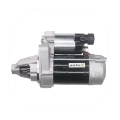
The starter motor is responsible for cranking the engine when you turn the key or press the start button.
When activated, the starter engages a small gear with the engine’s flywheel and spins the engine fast enough for combustion to begin. Once the engine starts running on its own, the starter disengages.
It’s one of the highest electrical loads on the vehicle.
Starters draw massive current from the battery every single time the engine starts. Over years of use, the internal components eventually wear down from repeated high-load cycles and heat exposure.
When a starter begins failing, the symptoms are usually very noticeable.
A failing starter often creates symptoms that drivers mistake for battery problems.
The most common signs include clicking when turning the key, intermittent starting problems, slow cranking, repeated no-start conditions, or dashboard lights working while the engine refuses to turn over.
One of the biggest clues is:
the lights and electronics still work normally, but the engine won’t crank.
That often points more toward the starter than the battery itself.
Read:
Why your car won't start but lights do work
And:
Why your car clicks but won't start
And:
Car won't start but battery light is on
Starter replacement is one of the most mobile-friendly repairs in the automotive industry.
The biggest reason is simple:
the car already can’t move.
A dead starter means the engine cannot crank, which means paying for a tow truck often becomes unnecessary if a mechanic can simply come to the vehicle instead.
Most starters are accessible either from underneath the vehicle, through the engine bay, or through the wheel-well area. An experienced mobile mechanic can often complete the repair in a driveway or parking lot using standard tools and jack stands.
Replacement starters are also compact and easy to transport, so parts availability is usually very good for common vehicles.
The process itself is relatively straightforward for an experienced mechanic.
First, the mechanic performs a full no-start diagnosis to confirm the starter is actually the problem. This is extremely important because many battery, ignition, relay, or wiring problems create symptoms that feel identical to starter failure.
Once the starter is confirmed faulty, the battery is disconnected for safety.
The mechanic then locates the starter, which is usually mounted near the transmission bell housing where it engages the flywheel.
The electrical connections are removed, mounting bolts are disconnected, and the old starter is removed from the vehicle.
The replacement starter is then installed, wiring is reconnected, and the vehicle is tested multiple times to confirm proper operation.
On many vehicles, the entire repair can be completed within 45 minutes to 2 hours.
Not all starter replacements are equally easy.
Some vehicles place the starter in very accessible locations. Others bury the starter deep inside crowded engine bays where additional components must first be removed.
Starter replacement becomes more difficult on certain V6 engines, tightly packaged European vehicles, larger trucks and SUVs, or vehicles with severe corrosion underneath.
In some cases, the starter may sit behind exhaust manifolds, heat shields, frame rails, or intake components, which adds significant labor time.
Some starter bolts also seize from rust and heat exposure, especially in northern climates where road salt is common.
A repair that takes 45 minutes on one vehicle may take several hours on another.
One of the most valuable things a mobile mechanic provides is:
proper diagnosis.
Not every no-start condition is actually a failed starter.
This is where many drivers and even some repair shops make expensive mistakes.
Several other problems can mimic starter failure almost perfectly.
A weak battery can create clicking sounds and no-start conditions that feel identical to a bad starter. Corroded battery terminals may prevent enough current from reaching the starter motor. A failed starter relay can interrupt power delivery completely, while ignition switch or neutral safety switch problems may prevent the starter signal from reaching the motor at all.
Without proper testing, it’s easy to replace the wrong component unnecessarily.
A proper no-start diagnosis usually involves battery voltage testing, starter circuit testing, relay testing, voltage-drop testing, charging-system checks, and starter signal testing.
Mechanics may also test whether the starter responds when lightly tapped - an old but effective field test for worn starter brushes.
This diagnostic process helps avoid replacing expensive parts unnecessarily.
Read:
Why your RPM's fluctuate while driving
And:
Why your car jerks when shifting gears
Starter replacement costs vary significantly depending on:
♦ vehicle make
♦ engine configuration
♦ starter location
♦ labor difficulty
♦ parts quality
For most common vehicles, total repair cost usually falls between:
$200-$500.
Luxury vehicles, European vehicles, trucks, and difficult-access engines may cost more.
But in many cases, mobile repair still saves money compared to towing charges, shop labor rates, rental car expenses, and multi-day repair delays.
For most common vehicles, starter replacement takes:
45 minutes to 1.5 hours
once the replacement part is available.
More difficult vehicles may require additional time because of tight engine access, seized bolts, corrosion, or extra component removal.
Most mobile mechanics can still complete the repair the same day.
While most starter replacements are mobile-friendly, some vehicles genuinely benefit from shop access and a lift.
This includes extremely tight engine bays, hybrid starter-generator systems, severe rust conditions, accident-damaged vehicles, or cars requiring major disassembly to access the starter.
A reputable mobile mechanic will tell you honestly if your specific vehicle is better suited for a shop environment rather than attempting an impractical repair onsite.
Technically, yes.
But starter replacement can become difficult quickly depending on the vehicle.
The job often involves working underneath the vehicle, handling heavy electrical cables, accessing tight bolts, and dealing with rusted hardware in cramped spaces.
Without proper diagnosis, many DIY repairs also end up replacing the wrong component entirely.
For many drivers, having a professional diagnose and replace the starter at home is safer, faster, and ultimately less frustrating.
One customer called us from an office parking garage after her Toyota Camry suddenly refused to start after work. The dashboard lights came on normally, but the engine only produced a single click. Another shop had told her it was probably the battery. Our mechanic tested the battery, confirmed it was healthy, and diagnosed a failed starter within minutes. The replacement was completed onsite without requiring a tow truck.
Another customer with a Ford F-150 believed the starter had failed because the truck would intermittently refuse to crank. Diagnosis revealed heavily corroded battery terminals creating voltage drop severe enough to mimic starter failure. Cleaning the terminals solved the issue without replacing the starter at all.
We also diagnosed a BMW whose owner had already replaced the battery himself before realizing the no-start problem was actually a seized starter motor hidden deep near the transmission housing.
Starter problems rarely improve on their own.
A starter that intermittently fails today may leave you completely stranded tomorrow.
Many drivers first notice occasional hesitation before cranking, followed by intermittent clicking, before the starter eventually fails entirely.
The worst part is:
starter failure usually happens at the most inconvenient possible moment.
Drivers commonly get stranded at gas stations, after work, during errands, in apartment parking lots, during bad weather, or late at night.
Catching the issue early can prevent a much bigger inconvenience later.
If your car won’t start and you suspect the starter has failed, Instant Car Fix mobile mechanics can diagnose the problem directly at your home, office, apartment complex, parking garage, or roadside location.
We perform:
♦ starter replacement
♦ no-start diagnostics
♦ battery testing
♦ charging-system testing
♦ starter relay diagnosis
♦ electrical troubleshooting
without requiring a tow truck or repair shop visit.
If you're searching for a mechanic near me because your car clicks but won’t start, Instant Car Fix can help diagnose the issue and get you back on the road quickly.


Yes. In most vehicles, a mobile mechanic can replace the starter directly in your driveway, parking lot, or office parking garage without needing a tow truck.
Absolutely. Since a failed starter usually prevents the car from starting, mobile mechanics commonly perform this repair onsite specifically to avoid towing.
Most starter replacements take between 45 minutes and 1.5 hours once the replacement part is available. Difficult-access vehicles may take longer.
Most starter replacements cost between $200-$500 depending on the vehicle and labor difficulty. Luxury vehicles and difficult-access engines may cost more.
Common signs include clicking sounds, no-crank conditions, intermittent starting problems, slow cranking, or dashboard lights working while the engine refuses to turn over.
Yes. Weak batteries and corroded battery terminals often create symptoms nearly identical to starter failure. Proper testing is extremely important before replacing parts.
A clicking sound often points toward either a weak battery or a failing starter. Proper voltage and circuit testing helps determine which component is actually causing the problem.
If the starter still works intermittently, the vehicle may continue starting temporarily. But once the starter fails completely, the vehicle may leave you stranded without warning.
Yes. Mobile mechanics regularly diagnose no-start conditions involving starters, batteries, relays, ignition switches, and charging-system problems directly at the customer’s location.
Certain European vehicles, large trucks, V6 engines, and tightly packaged engine bays can make starter access significantly more difficult and labor-intensive.
If your car won’t start and you suspect a bad starter, InstantCarFix mobile mechanics can diagnose the no-start issue directly at your home, office, or parking lot. We perform starter replacement, battery testing, charging-system diagnostics, and electrical troubleshooting without requiring a tow truck.

Great service, everything was fine, they were nice and polite, will be using them for all my car needs


Great service! I would definitely use them again if I ever find I need a dead battery replaced with no way to get to a shop except having it towed in. Love that they come directly to your house!

Came out snd fixed my parents car today. Very nice young man my dad said. He did a good job. Thank you.

Got his work done quickly and efficiently even though we had some hiccups he stuck through it till the end. Great mechanic great man.

The mechanics were out promptly and completed the service efficiently! The entire experience was easy to manage.

Excelent he was very professional and polite my car was running again within 10 minutes after he arrives

Sergio was fantastic! He was very informative and explained everything to us during the diagnostic. Thank you, Sergio!

The experience is well received mechanic was on time and waited for me and stayed until the fljob is completer

Reggie was outstanding, quick, and personable. I’ll be sure to Instantaneous Car Fix the next time I’m stuck on the road.

Great service, everything was fine, they were nice and polite, will be using them for all my car needs
Great service! I would definitely use them again if I ever find I need a dead battery replaced with no way to get to a shop except having it towed in. Love that they come directly to your house!
Came out snd fixed my parents car today. Very nice young man my dad said. He did a good job. Thank you.
Got his work done quickly and efficiently even though we had some hiccups he stuck through it till the end. Great mechanic great man.
The mechanics were out promptly and completed the service efficiently! The entire experience was easy to manage.
Excelent he was very professional and polite my car was running again within 10 minutes after he arrives
Sergio was fantastic! He was very informative and explained everything to us during the diagnostic. Thank you, Sergio!
The experience is well received mechanic was on time and waited for me and stayed until the fljob is completer
Reggie was outstanding, quick, and personable. I’ll be sure to Instantaneous Car Fix the next time I’m stuck on the road.