Financing all Credit Types - 
Financing all Credit Types -
Financing all Credit Types -
Financing all Credit Types -
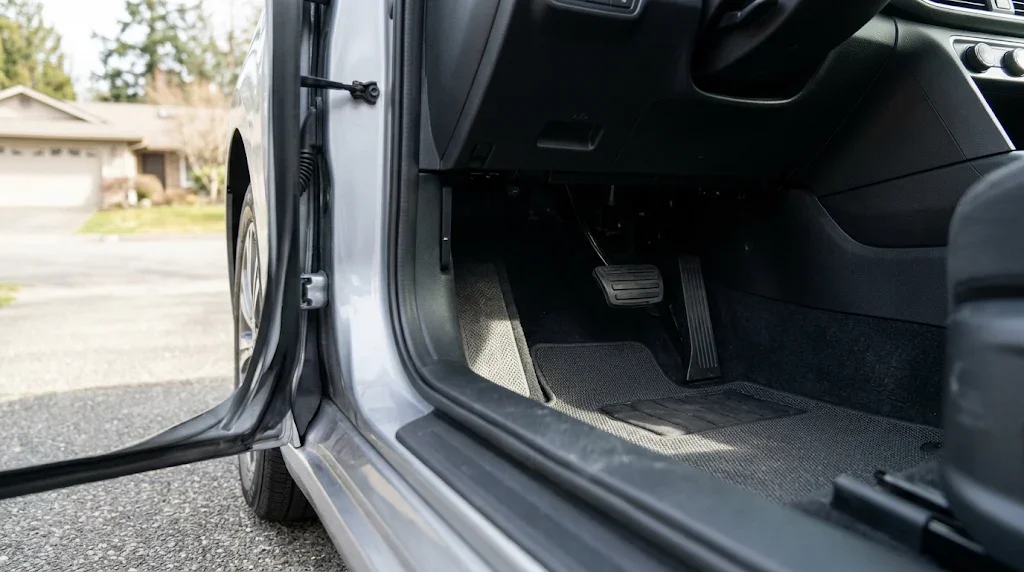
If your brake pedal travels to the floor or will not hold normal resistance, do not drive the car to test it. Keep it parked and arrange an inspection or transport. If braking changes while you are moving, concentrate on stopping safely and seek assistance.
An empty patch of driveway can make the problem confusing. Where did the pressure go if no fluid leaked out? The answer may involve fluid moving internally, air compressing inside the system, or brake components traveling farther than intended. Those possibilities require different repairs.
An external leak means fluid escapes from the hydraulic system. An internal leak can let fluid pass a seal without leaving the assembly. A glance under the parked car cannot distinguish these conditions.
Some external leaks also need closer access to find. A rear drum, for example, can conceal leakage from a brake wheel cylinder. A mechanic examines the components, fittings, and surrounding areas rather than relying on whether a spot formed beneath the car.
Report any falling fluid level, wetness near a wheel, or previous top-ups. Do not crawl underneath, remove a wheel, or open hydraulic connections to search for a leak yourself.
The reservoir holds a supply of fluid; it is not a gauge of how well the brakes generate and retain pressure. Fluid can remain present while a fault prevents the system from applying the brakes properly.
Inside the brake master cylinder, pistons and seals help create hydraulic pressure. Fluid bypassing a damaged internal seal can allow a sinking pedal without an obvious external fluid loss. That makes the master cylinder a component to test, not a diagnosis established by the reservoir level.
If you can safely identify the reservoir using the owner's manual, note its visible level without removing the cap. Do not add an unspecified fluid or treat topping up as a repair. A low level needs an explanation, and adding fluid does not restore a damaged seal or line.
"Soft," "low," and "sinking" can describe different experiences. Tell the mechanic what happened before the vehicle was parked:
A soft brake pedal can involve trapped air, but excessive travel can also come from component movement or adjustment. Raybestos describes how a loose wheel bearing can let the rotor move and push a caliper piston back, leaving extra travel before the brake applies. The inspection must include mechanical condition as well as hydraulics.
These details help plan the checks. Do not repeat the symptom on the road or use temporary improvement after pumping as evidence that the car is safe.
Air compresses much more readily than brake fluid, which can make the pedal feel soft and increase its travel. Removing trapped air through brake bleeding may be necessary after the system has been opened or when air is otherwise found.
The technician also needs to establish why the air is present. Repeating a bleed without correcting a leak or installation problem can leave the cause unresolved. On some ABS-equipped vehicles, the specified process uses a scan tool to operate the hydraulic unit and release trapped air.
A pedal problem after recent work deserves a review of that work: parts installation, component adjustment, fluid specification, bleeding procedure, and remaining leaks. It does not automatically mean the new master cylinder is defective or the ABS unit needs replacement.
A conventional vacuum booster helps multiply the force you apply. Losing that assistance can make the pedal harder to press. By contrast, a pedal continuing toward the floor calls for investigation of travel and pressure retention.
A small pedal movement when vacuum assistance begins is different from an ongoing sink or loss of braking. Brake systems vary, including electronic and hybrid arrangements, so a generic engine-off/engine-on test is not a substitute for the vehicle's diagnostic procedure.
For a brake pedal that goes to the floor, ask where pressure loss or excessive movement was confirmed. Was there an external leak, internal bypass, trapped air, or a mechanical travel problem?
If a brake line or another component is recommended, the estimate should identify the affected location and related work. A technician may isolate sections of the system with approved equipment to narrow the fault. This is professional diagnostic work, not a reason to clamp hoses or plug lines at home.
Before the vehicle returns to use, the repair needs checks for leaks, correct pedal operation, and braking performance following the applicable service procedure. A reservoir between its marks is only part of that verification.


It can fail without an external leak. Fluid may bypass internal seals instead of maintaining pressure. The reservoir can still contain fluid, so the diagnosis requires pressure-retention and isolation checks appropriate to the vehicle.
Loss of conventional vacuum assistance can produce a hard pedal requiring more effort. Internal master-cylinder bypass can produce a sinking pedal. These patterns guide separate checks; other faults and different brake designs must also be considered.
A pedal that continues sinking while stopped needs assessment for pressure loss or excessive travel. Tell the technician whether it happens under steady pressure and whether recent repairs preceded it. Keep the car parked rather than trying to reproduce it in traffic.
If moving, focus on reaching a safe stop and call for assistance. Do not resume driving. If already parked, leave the vehicle there and arrange inspection or transport; a missing puddle does not change that advice.
A pedal that sinks under steady pressure is a possible sign. It is not exclusive to the master cylinder, so the technician must check the rest of the brake system before recommending replacement.
Access, brake-system design, and the specified preparation and bleeding procedures affect the work. Ask whether the estimate includes required system bleeding, any ABS service procedure, and verification of pedal operation and braking after the repair.
Book an Instant Car Fix mechanic to come to you. We service most areas nationwide.

Dustin did a fantastic job getting my broken bolt out fast and efficiently. I can now continue my project. Thank you!


Needed a subframe cradle replaced for a 2014 Dodge Charger 5.7. Left the mechanic this morning. I had to go to work. Got back from work. Checked on my vehicle turned it on, and no more engine vibration inside my cabin. Job well done. Thank you.

My mobile mechanic Donny was fantastic. He arrived promptly, diagnosed the issue right away, and replaced my battery quickly and efficiently. He’s extremely knowledgeable and clearly an expert in his field. I really appreciated his professionalism and the smooth experience from start to finish. I would gladly use his services again and highly recommend him to anyone needing reliable mobile auto repair.

Mr. Jimmy is great and very good with his work. I would recommend him again to do the work. Thank you!

Somewhat hesitant as it was a website I had never used before, but the mechanic came out. Performed the service, quick and efficient and good to go.

Although there was some confusion about our appointment window. I found customer service to be extremely helpful. My only suggestion would be that there is the opportunity to chat with the actual mechanic. I was arranging service for my father, who’s out of town and had some memory issues, so it would’ve made it much easier to coordinate and understand if I could chat with the mechanic.

Jelson monterrosa and Adrian gee Did a fantastic job work , quick and efficient , and i'm very happy with the work they did to my vehicle definitely would call them again They were absolutely the best

Used this site first time and got good results,mechanic came on time ,did all testing and diagnostic,found out our battery not working right.We happy with service.

Sergio fixed the car really fast and it drives and sounds much better than before. I would recommend having him fix any car again

Dustin did a fantastic job getting my broken bolt out fast and efficiently. I can now continue my project. Thank you!
Needed a subframe cradle replaced for a 2014 Dodge Charger 5.7. Left the mechanic this morning. I had to go to work. Got back from work. Checked on my vehicle turned it on, and no more engine vibration inside my cabin. Job well done. Thank you.
My mobile mechanic Donny was fantastic. He arrived promptly, diagnosed the issue right away, and replaced my battery quickly and efficiently. He’s extremely knowledgeable and clearly an expert in his field. I really appreciated his professionalism and the smooth experience from start to finish. I would gladly use his services again and highly recommend him to anyone needing reliable mobile auto repair.
Mr. Jimmy is great and very good with his work. I would recommend him again to do the work. Thank you!
Somewhat hesitant as it was a website I had never used before, but the mechanic came out. Performed the service, quick and efficient and good to go.
Although there was some confusion about our appointment window. I found customer service to be extremely helpful. My only suggestion would be that there is the opportunity to chat with the actual mechanic. I was arranging service for my father, who’s out of town and had some memory issues, so it would’ve made it much easier to coordinate and understand if I could chat with the mechanic.
Jelson monterrosa and Adrian gee Did a fantastic job work , quick and efficient , and i'm very happy with the work they did to my vehicle definitely would call them again They were absolutely the best
Used this site first time and got good results,mechanic came on time ,did all testing and diagnostic,found out our battery not working right.We happy with service.
Sergio fixed the car really fast and it drives and sounds much better than before. I would recommend having him fix any car again