Financing all Credit Types - 
Financing all Credit Types -
Financing all Credit Types -
Financing all Credit Types -
You go to start your car.
Maybe you hear a click.
Maybe the engine cranks slowly.
Maybe absolutely nothing happens at all.
At that point, most people immediately assume:
“The battery is dead.”
And honestly?
Sometimes they’re right.
But a LOT of the time, the battery isn’t actually the problem.
At Instant Car Fix, we see this constantly. Customers replace:
♦ batteries
♦ alternators
♦ even ignition parts
…only to discover the real issue was the starter motor the entire time.
The problem is that bad starters and weak batteries create VERY similar symptoms:
♦ clicking
♦ slow cranking
♦ intermittent no-starts
♦ dashboard lights
♦ sudden failure
And unless you know what to look for, they’re easy to confuse.
This guide breaks down:
♦ how to tell the difference
♦what sounds matter most
♦ what you can test yourself
♦ when jump starts help
♦ and when the starter is the real problem.
Because honestly?
Guessing gets expensive fast.
A lot of drivers lump them together, but they do completely different jobs.
The battery stores electrical power.
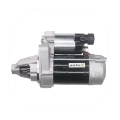
The starter uses that power to physically turn the engine over when you start the vehicle.
Think of it this way:
♦ the battery provides the energy
♦ the starter uses the energy.
If either one fails:
the vehicle may not start.
That’s why the symptoms overlap so much.
Battery problems usually become noticeable gradually.
You’ll often notice:
♦ slower starts in the morning
♦ dim headlights
♦ electronics acting strange
♦ weak cranking
♦ random clicking
♦ or needing frequent jump starts.
Cold weather also makes weak batteries MUCH worse.
Honestly, a battery that barely survived summer often completely dies during the first serious cold snap.
♦ Slow cranking
♦ Rapid clicking
♦ Dim lights during startup
♦ Vehicle starts after jump
♦ Battery warning light
♦ Electrical accessories acting weak
♦ Car dies after sitting
One major clue:
the car usually starts normally once boosted.
That’s important.
Starter problems feel different once you know what to listen for.
Instead of gradual weakness, starter failures often feel:
♦ random
♦ inconsistent
♦ sudden
♦ or mechanical.
A bad starter usually struggles to physically engage the engine.
♦ Single loud click
♦ No crank despite good battery
♦ Grinding noise
♦ Whirring sound
♦ Intermittent starting
♦ Smoke or burning smell
♦ Jump start doesn’t help
And honestly?
One of the BIGGEST clues is:
the lights stay bright but the engine still won’t crank.
That usually points away from the battery.
This is where mechanics immediately narrow things down.
Because different clicks mean different failures.
Rapid clicking usually means:
weak battery voltage.
The starter solenoid keeps trying to engage but there isn’t enough power to hold it closed.
This is classic battery behavior.
One loud solid click usually points toward:
starter failure.
The solenoid engages once…
but the starter motor itself never spins.
We see this constantly.
Grinding usually means:
♦ worn starter gear
♦ damaged flywheel teeth
♦ or improper starter engagement.
This is almost never caused by the battery.
This simple test actually works surprisingly well.
Turn your headlights on.
Now try starting the vehicle.
That usually means:
the battery is weak.
The starter is demanding more power than the battery can provide.
That usually means:
the battery is probably okay.
Now the starter becomes much more suspicious.
This is another huge clue.
That usually means:
battery problem.
Either:
♦ weak battery
♦ discharged battery
♦ bad battery connection
♦ or charging issue.
Now the starter becomes a major suspect.
Because a healthy external battery should still crank the engine.
If it doesn’t:
♦ starter
♦ relay
♦ ignition switch
♦ or electrical connection
becomes far more likely.
Believe it or not:
this still works sometimes.
If you lightly tap the starter while someone turns the key:
the vehicle may suddenly start.
That’s usually because:
the starter has a dead spot internally.
Honestly?
We still see this trick work more often than people expect.
This is where people start replacing random parts.
A lot of drivers assume:
if the lights work, the battery must be good.
Not necessarily.
Lights use FAR less power than the starter motor.
A weak battery may still power:
♦ headlights
♦ dashboard
♦ radio
♦ screens
…but fail completely under starter load.
Starter failures are often intermittent before becoming permanent.
That’s why people get confused.
A starter with worn internal contacts may:
♦ work perfectly once
♦ fail the next time
♦ then randomly work again later.
That inconsistency is VERY common.
Honestly?
This happens constantly.
People replace batteries first because it feels like the obvious answer.
Then:
♦ or the exact same issue returns days later.
At that point, the starter usually becomes the real suspect.
Absolutely.
And this gets overlooked all the time.
The alternator charges the battery while driving.
If the alternator fails:
the battery slowly drains over time.
Then eventually:
the car won’t start.
That’s why some drivers replace:
♦ battery after battery
without fixing the real issue.
♦ Flickering lights
♦ Electrical issues while driving
♦ Burning smell
♦ Battery warning light
If your battery repeatedly dies:
don’t ignore the charging system.
Also read:
Some vehicles absolutely develop patterns over time.
Very common:
♦ starter heat soak
♦ relay issues
♦ intermittent no-starts
Especially older Triton engines.
We constantly see:
♦ worn starter contacts
♦ intermittent clicking
♦ random no-start situations
Especially high-mileage Hondas.
Common:
♦ starter wear
♦ battery cable corrosion
♦ grounding problems
Wranglers often develop:
♦ electrical gremlins
♦ battery drain issues
♦ aftermarket wiring problems
Especially modified Jeeps.
Common issues include:
♦ battery registration problems
♦ electrical faults
♦ starter failures after 100k+ miles
European vehicles are especially sensitive to voltage problems.
A customer with a Silverado called us after replacing his battery himself.
The truck still wouldn’t start.
He kept hearing:
one loud click.
Battery tested perfectly healthy.
The starter?
Dead.
The customer spent money on a battery he never actually needed.
A Honda Accord owner told us:
“It starts sometimes and sometimes it doesn’t.”
Classic starter behavior.
Battery tested good.
Alternator tested good.
We tapped the starter once while he turned the key…
and the car fired right up.
That starter failed completely two days later.
One customer was convinced the starter had failed because the car completely died overnight.
Turns out:
the alternator wasn’t charging the battery at all.
The battery drained repeatedly until it could no longer crank the engine.
The starter was perfectly fine.
Before replacing anything randomly, check these first.
A healthy fully charged battery should read roughly:
12.6 volts.
Anything much lower becomes suspicious.
The sound matters A LOT.
♦ rapid clicks
♦ single click
♦ grinding
♦ silence
♦ normal crank
all point toward different failures.
This is one of the fastest ways to narrow things down.
If the jump works:
battery becomes more likely.
If nothing changes:
starter becomes much more suspicious.
Loose or corroded terminals create HUGE starting problems.
And honestly?
We’ve seen people replace perfectly good batteries over dirty terminals.
This simple trick tells you more than most people realize.
Dim lights during cranking usually point toward weak battery voltage.
Battery replacement is usually cheaper than starter replacement.
Most standard batteries cost somewhere around:
♦ $150-$300 installed
depending on:
♦ battery size
♦ AGM requirements
♦ vehicle type.
Starter replacement is usually more expensive because labor is higher.
Most starter jobs fall somewhere around:
♦$250-$700+
depending on:
♦ vehicle access
♦ engine size
♦ OEM vs aftermarket parts.
European vehicles are usually higher.
Honestly, this is where people waste the most money.
They replace:
♦ battery
♦ starter
♦ alternator
…without actually testing anything first.
And suddenly:
they’ve spent over $1,000 chasing a bad connection or relay.
Modern vehicles are complicated enough that proper diagnosis matters.
A LOT.
At Instant Car Fix, our mobile mechanics diagnose:
♦ no-start problems
♦ dead batteries
♦ starter failures
♦ alternator issues
♦ charging problems
♦ and electrical faults
directly at your home, office, or parking garage.
So instead of guessing and replacing random parts, we help you figure out what’s ACTUALLY wrong before the problem gets worse.
Bad starters and weak batteries create VERY similar symptoms.
That’s why so many drivers replace the wrong part first.
The key is paying attention to:
♦ the sounds
♦ the cranking behavior
♦ jump-start response
♦ electrical symptoms
♦ and battery performance under load.
And honestly?
Once you understand the differences, the diagnosis becomes much easier.
Whether the issue ends up being:
♦ the battery
♦ the starter
♦ alternator
♦ relay
♦ or electrical connection
…the goal is finding the REAL problem before wasting money on unnecessary repairs.
At Instant Car Fix, we diagnose and repair no-start problems directly at your location so you can avoid towing, dealership delays, and expensive guesswork.


A bad battery usually causes slow cranking, rapid clicking, dim lights, or needing jump starts. A bad starter more commonly causes a single loud click, grinding noises, or complete no-crank situations even with a healthy battery. The sound the car makes is often the biggest clue.
Yes. A failing starter can draw excessive current and place extra strain on the battery. Over time, repeated hard starting can weaken the battery as well.
One loud click usually points toward a failing starter or starter solenoid. Rapid repeated clicking is more commonly caused by a weak battery.
Usually, but not always. A discharged battery, bad alternator, or poor battery connection can all respond temporarily to a jump start. If the problem keeps returning, the charging system should also be tested.
Lights require far less power than the starter motor. A weak battery may still power accessories while failing under the heavy load required to crank the engine.
Absolutely. Cold weather increases strain on the entire starting system, including the battery, starter, and engine oil viscosity. Weak starters often fail completely once temperatures drop.
Most starters last somewhere between 100,000-150,000 miles depending on driving habits, climate, and vehicle design. Heat and repeated hard starts shorten starter lifespan significantly.
Only if both are actually failing. Replacing parts without testing usually wastes money. A proper diagnostic should determine which component is truly causing the no-start issue.
Our mobile mechanics can diagnose battery problems, starter failures, alternator issues, and electrical no-start conditions directly at your location - before you waste money replacing the wrong parts.

Reggie was outstanding, quick, and personable. I’ll be sure to Instantaneous Car Fix the next time I’m stuck on the road.


The mechanics were out promptly and completed the service efficiently! The entire experience was easy to manage.

Came out snd fixed my parents car today. Very nice young man my dad said. He did a good job. Thank you.

Excelent he was very professional and polite my car was running again within 10 minutes after he arrives

The experience is well received mechanic was on time and waited for me and stayed until the fljob is completer

Sergio was fantastic! He was very informative and explained everything to us during the diagnostic. Thank you, Sergio!

Great service! I would definitely use them again if I ever find I need a dead battery replaced with no way to get to a shop except having it towed in. Love that they come directly to your house!

Great service, everything was fine, they were nice and polite, will be using them for all my car needs

Got his work done quickly and efficiently even though we had some hiccups he stuck through it till the end. Great mechanic great man.

Reggie was outstanding, quick, and personable. I’ll be sure to Instantaneous Car Fix the next time I’m stuck on the road.
The mechanics were out promptly and completed the service efficiently! The entire experience was easy to manage.
Came out snd fixed my parents car today. Very nice young man my dad said. He did a good job. Thank you.
Excelent he was very professional and polite my car was running again within 10 minutes after he arrives
The experience is well received mechanic was on time and waited for me and stayed until the fljob is completer
Sergio was fantastic! He was very informative and explained everything to us during the diagnostic. Thank you, Sergio!
Great service! I would definitely use them again if I ever find I need a dead battery replaced with no way to get to a shop except having it towed in. Love that they come directly to your house!
Great service, everything was fine, they were nice and polite, will be using them for all my car needs
Got his work done quickly and efficiently even though we had some hiccups he stuck through it till the end. Great mechanic great man.