Financing all Credit Types - 
Financing all Credit Types -
Financing all Credit Types -
Financing all Credit Types -
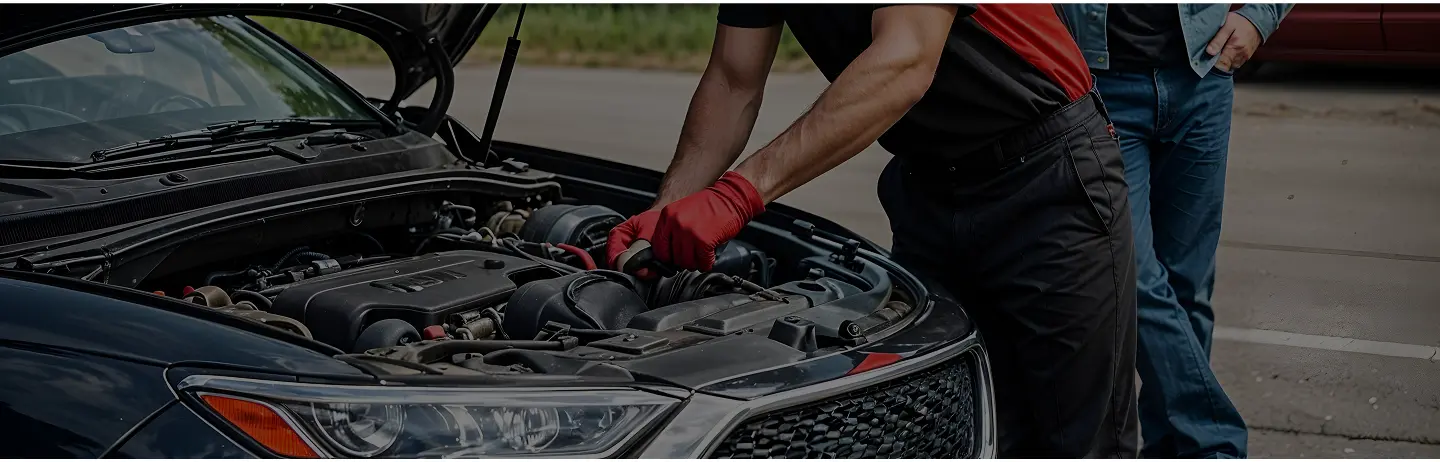
A failing car battery rarely dies without warning. Most drivers notice slow engine cranking, clicking noises, dim lights, repeated jump-starts, or dashboard warning lights weeks before the battery completely fails.
Modern vehicles rely heavily on stable battery voltage to operate onboard computers, infotainment systems, safety features, and engine-management systems. When battery voltage begins dropping, problems can appear throughout the vehicle long before the battery completely dies.
A mobile mechanic near me can often diagnose battery problems directly at your home, office, or parking garage without requiring a tow truck. In many cases, same-day battery testing and replacement can prevent you from getting stranded unexpectedly.
The most common signs of a bad car battery include:
♦ slow engine cranking,
♦ rapid clicking when turning the key,
♦ dashboard battery warning lights,
♦ dim or flickering headlights,
♦ repeated jump-starts,
♦ electrical glitches,
♦ and difficulty starting in cold weather.
These warning signs often appear weeks before total battery failure.
If your vehicle is already showing multiple symptoms, you may also want to read:
One of the earliest warning signs of a failing battery is a slow engine crank. Instead of starting quickly and smoothly, the engine sounds weak and labored during startup.
Cold weather often exposes weak batteries because low temperatures reduce cranking power significantly. A battery that seems fine during warm weather may suddenly struggle once temperatures drop.
If your engine sounds slower than normal during startup, your battery may already be losing reserve capacity. In many cases, this is the final warning before a complete no-start condition develops.
Related Articles:
Rapid clicking usually means the battery has enough power to engage the starter solenoid but not enough power to crank the engine. Complete silence may indicate a fully dead battery, corroded terminals, or poor electrical connections.
Drivers often mistake starter problems for battery problems because the symptoms overlap heavily. A weak battery can create:
♦ rapid clicking,
♦ single-click no-start conditions,
♦ slow cranking,
♦ or intermittent starting problems.
If your lights turn on but the engine refuses to crank, both the battery and starter system should be tested.
Related Articles:
The battery warning light does not always mean the battery itself is failing. In many cases, it indicates a charging-system problem involving:
♦ the alternator,
♦ voltage regulator,
♦ serpentine belt,
♦ or electrical wiring.
If the battery light appears while driving, the vehicle may not be charging correctly. Some vehicles continue operating temporarily before suddenly shutting down once battery voltage becomes critically low.
Many charging-system failures begin with intermittent warning lights long before complete alternator failure occurs.
Related Articles:
Headlights often reveal charging-system problems before the vehicle completely fails. Lights that dim at idle or brighten while revving the engine frequently indicate unstable voltage somewhere in the charging system.
Weak batteries, failing alternators, poor grounds, or corroded battery terminals can all contribute to flickering lights. Interior lighting and dashboard brightness may also fluctuate as voltage changes.
If your headlights flicker consistently while driving, the charging system should be tested immediately before the vehicle becomes unreliable.
Related Articles:
Modern vehicles are heavily dependent on stable electrical voltage. When battery voltage becomes inconsistent, seemingly unrelated systems can begin malfunctioning.
Drivers commonly report:
♦ radio resets,
♦ infotainment glitches,
♦ power-window problems,
♦ false warning lights,
♦ sensor communication errors,
♦ and intermittent electronic failures.
Many expensive electrical repairs are misdiagnosed before the battery or charging system is properly tested. Inconsistent voltage can create “electrical gremlin” symptoms throughout the vehicle.
Related Articles:
A swollen or bloated battery case is a serious warning sign that should never be ignored. This usually indicates overheating, overcharging, or internal battery failure.
Excessive heat can cause gases to build up inside the battery housing, creating pressure that deforms the case. In severe situations, swollen batteries may leak acid or rupture completely.
A visibly swollen battery should be replaced immediately rather than recharged or reused.
Related Articles:
A sulfur or rotten-egg smell coming from under the hood often indicates battery leakage or overcharging. This odor is caused by hydrogen sulfide gas escaping from the battery.
Leaking batteries can damage surrounding electrical components, cables, and battery trays if ignored for too long. In some cases, battery acid corrosion spreads into nearby wiring harnesses and connectors.
If you notice a strong sulfur smell near the battery, the vehicle should be inspected immediately.
Related Articles:
A healthy battery should not require repeated jump-starts under normal driving conditions. If your car repeatedly needs boosting, the battery likely cannot hold an adequate charge anymore.
However, repeated jump-starts are not always caused solely by battery age. Weak alternators, parasitic electrical drains, or charging-system issues can slowly discharge the battery over time.
Jump-starting repeatedly masks the real problem instead of solving it.
Related Articles:
Battery corrosion usually appears as white, blue, or green buildup around the battery terminals. Corrosion increases electrical resistance and interferes with charging-system performance.
Mild corrosion can sometimes be cleaned successfully, but severe corrosion combined with other battery symptoms often indicates replacement is overdue.
Corroded terminals may also create:
♦ intermittent no-start conditions,
♦ voltage instability,
♦ or poor charging performance.
Related Articles:
Most car batteries last between 3 and 5 years depending on:
♦ climate,
♦ driving habits,
♦ electrical demand,
♦ and battery quality.
Vehicles with stop-start systems, heated seats, large infotainment systems, and advanced driver-assistance features often wear batteries out faster than older vehicles.
After the three-year mark, batteries should be tested regularly to avoid unexpected failure.
Cold weather dramatically reduces battery cranking performance. A battery that starts fine during summer may fail suddenly during winter mornings because low temperatures slow the battery’s internal chemical reactions.
Weak batteries often appear “good enough” during warm weather before completely failing during the first major cold snap.
This is one of the biggest reasons battery-related roadside assistance calls spike during winter months.
Related Articles:
If your radio resets, clock resets, seat memory disappears, or infotainment settings reset after startup, the battery may be dropping too low during cranking.
Modern vehicles depend on stable low-voltage memory circuits. Weak batteries can interrupt those systems during startup and create repeated electronic resets.
This problem becomes more common as batteries age and lose reserve capacity.
Low or unstable battery voltage can trigger false sensor readings, communication errors, ECU warnings, and check engine lights.
Many drivers replace expensive sensors unnecessarily before discovering the real problem was low voltage from the battery or charging system.
Before replacing components based solely on fault codes, the battery and alternator should always be tested first.
Battery problems usually cause:
♦ slow cranking,
♦ repeated jump-starts,
♦ clicking noises,
♦ and hard starts after the vehicle sits overnight.
Alternator problems are more likely to cause:
♦ the vehicle dying while driving,
♦ battery warning lights,
♦ flickering lights while running,
♦ and widespread electrical failures.
A simple rule:
♦ If the car struggles to START, the battery is more likely the issue.
♦ If the car dies WHILE DRIVING, the alternator is more likely failing.
Certain vehicles are known for increased battery wear because of heavy electrical demand, parasitic drains, or advanced onboard electronics.
Common examples include:
♦ Ford F-150
♦ BMW 3 Series and 5 Series
♦ Jeep Grand Cherokee
♦ RAM 1500
♦ Honda CR-V
♦ Mercedes-Benz C-Class and E-Class
Many of these vehicles use:
♦ advanced infotainment systems,
♦ stop-start technology,
♦ battery-management systems,
♦ or auxiliary batteries that place additional stress on the charging system.
Related Articles:
Yes. A mobile mechanic can often:
♦ test batteries onsite,
♦ replace batteries at your location,
♦ diagnose charging-system problems,
♦ inspect starter systems,
♦ and identify parasitic battery drains.
In many cases, battery replacement can be completed without towing the vehicle.
This is especially helpful for:
♦ no-start situations,
♦ dead batteries at work,
♦ parking garage breakdowns,
♦ or vehicles stranded at home.
A failing battery almost always gives warning signs before complete failure.
Slow cranking, repeated jump-starts, flickering lights, electrical glitches, and warning lights should never be ignored.
If your battery is over three years old or your vehicle is showing any of these symptoms, a professional battery and charging-system test can help prevent unexpected breakdowns.
A mobile mechanic near me can often diagnose and replace a failing battery directly at your location without requiring a tow truck.


Yes. Modern vehicles rely heavily on stable voltage to keep the engine computer, fuel system, and ignition system operating correctly. If battery voltage drops too low especially when combined with a weak alternator, the vehicle may stall unexpectedly while driving.
Most car batteries last between 3 and 5 years depending on climate, driving habits, and electrical demand. Vehicles with stop-start systems, heated seats, large infotainment systems, or advanced driver-assistance features often wear batteries out faster.
Cold weather usually exposes an already weak battery rather than instantly killing a healthy one. Low temperatures slow the battery’s internal chemical reactions and reduce available cranking power, which is why many batteries fail during the first cold snap of the season.
Yes. Low or unstable battery voltage can interfere with sensors, engine computers, and communication modules, which may trigger false warning lights and error codes. Many drivers mistakenly replace expensive sensors before realizing the battery or charging system was the real issue.
Battery problems usually appear as slow cranking, clicking noises, or repeated jump-starts after the vehicle sits overnight. Alternator problems are more likely to cause the vehicle to die while driving, flickering lights while running, or charging-system warnings.
Yes. A mobile mechanic can often test and replace your battery directly at your home, office, or parking garage without requiring a tow truck. Most battery replacements can be completed the same day once the correct battery is available.
If your vehicle is showing signs of battery failure, a mobile mechanic can test your battery, alternator, and charging system directly at your location. Avoid towing costs and get same-day battery replacement service from a trusted mechanic near me.

Prompt service, very helpful in diagnosing whether I had the right parts. Have great advice on when to change the parts again. Would recommend to anyone who needs mechanic support


They were prompt in getting a mechanic to us. Clark’s Mobile Repair showed up. Immediately fixed the problem. He was very professional

Had a leaky fuel rail, tech came out same day and fixed it asap, very professional and very easy to get work done.

Needed a car battery changed. Set up the appointment and they had someone out the very next day. The mechanic did a great job making it happen. Very much appreciated.

The mechanic was very pleasant, got to work immediately, knew what he was doing and completed the battery replacement quickly. I was impressed.

From start to finish the whole process was smooth and easy. The website was easy to navigate and when I called for additional assistance I was helped immediately and there was no pushing me to purchase additional services. The mechanics arrived on time, asked good questions, and worked quickly. Very polite and helpful. I was glad I chose this company.

Adam was great! I was skeptical at first, but glad I booked. 10/10 definitely will book again when I need services done on my vehicle.

Very skilled and prompt on site and the truck starts up fine with new starter- highly recommend him for future repairs

Instant Car fix saved the day, the tech was knowledgeable and efficient and knew exactly what was needed. Definitely recommend for my BMW F32.

Prompt service, very helpful in diagnosing whether I had the right parts. Have great advice on when to change the parts again. Would recommend to anyone who needs mechanic support
They were prompt in getting a mechanic to us. Clark’s Mobile Repair showed up. Immediately fixed the problem. He was very professional
Had a leaky fuel rail, tech came out same day and fixed it asap, very professional and very easy to get work done.
Needed a car battery changed. Set up the appointment and they had someone out the very next day. The mechanic did a great job making it happen. Very much appreciated.
The mechanic was very pleasant, got to work immediately, knew what he was doing and completed the battery replacement quickly. I was impressed.
From start to finish the whole process was smooth and easy. The website was easy to navigate and when I called for additional assistance I was helped immediately and there was no pushing me to purchase additional services. The mechanics arrived on time, asked good questions, and worked quickly. Very polite and helpful. I was glad I chose this company.
Adam was great! I was skeptical at first, but glad I booked. 10/10 definitely will book again when I need services done on my vehicle.
Very skilled and prompt on site and the truck starts up fine with new starter- highly recommend him for future repairs
Instant Car fix saved the day, the tech was knowledgeable and efficient and knew exactly what was needed. Definitely recommend for my BMW F32.