Financing all Credit Types - 
Financing all Credit Types -
Financing all Credit Types -
Financing all Credit Types -
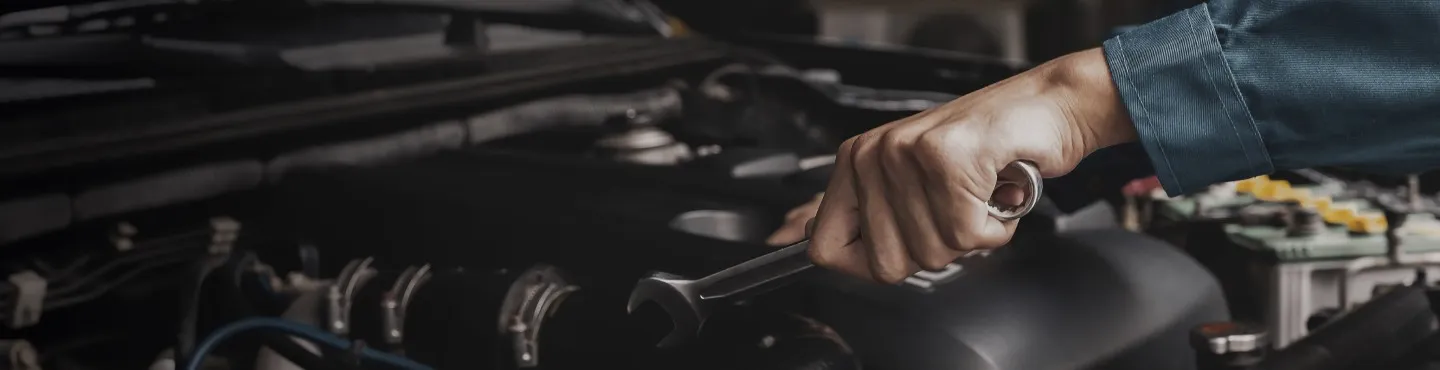
P0325 means the engine control module (ECM) has detected a malfunction in the Knock Sensor 1 circuit on Bank 1. The code may be caused by a faulty knock sensor, damaged wiring, poor electrical connections, or engine conditions that create excessive knocking. While the vehicle may still run, the problem should be diagnosed quickly to avoid potential engine damage.
Drivers often notice one or more of the following:
Check engine light illuminated (steady or flashing)
Engine knocking or pinging under load
Reduced acceleration or engine power
Rough idle or vibrations at stops
Poor fuel economy
If your check engine light is flashing, stop driving immediately to prevent potential engine damage.
Over time, heat cycles, vibration, and engine age can damage a knock sensor. A malfunctioning sensor cannot detect abnormal combustion, causing the ECM to mismanage ignition timing.
Damaged or corroded wires, broken connectors, or loose fittings in the knock sensor circuit are common causes. Knock sensors are located in high-heat areas, which makes wiring particularly vulnerable.
Low-octane fuel can cause pre-ignition or detonation that triggers the sensor.
Carbon buildup in the cylinder head or combustion chamber increases knocking.
Pre-ignition due to overheating or lean air-fuel mixtures can also trip P0325.
In rare cases, a faulty ECM may misread signals from a perfectly functional knock sensor. However, wiring and sensor issues account for the vast majority of P0325 codes.
Some engines are more prone to knock sensor problems due to design and usage:
Honda vehicles commonly experience P0325 due to aging knock sensors, wiring deterioration, or intake manifold-related sensor access issues. High-mileage Honda Accord and CR-V models are among the most frequently affected vehicles. Diagnosing the sensor and wiring early can help prevent performance and fuel economy problems.
Engines with 100,000+ miles, frequent low-octane fuel usage, or irregular maintenance schedules are more likely to show P0325.
A structured diagnostic approach ensures accurate repair:
Scan the ECM to confirm the P0325 code.
Check freeze-frame data for engine RPM, load, and temperature.
Inspect the knock sensor physically for cracks, damage, or loose mounting.
Test the wiring harness and connectors for continuity, shorts, or corrosion.
Cylinder knock simulation tests may be performed for advanced diagnostics.
Replace faulty sensors or repair wiring as needed.
Clear the code and perform a test drive to ensure the code does not return.
This approach prevents unnecessary replacements and ensures the root cause is resolved the first time.
Case 1 – 2015 Ford F-150 3.5L EcoBoost
Owner reported engine knocking under acceleration. Scan showed P0325. Physical inspection revealed a cracked knock sensor due to heat exposure. Sensor replacement resolved the problem.
Case 2 – 2016 Honda Accord 2.4L
The vehicle ran rough at idle and had reduced power. P0325 confirmed. Wiring insulation had melted near the knock sensor. Repair included wiring replacement and sensor replacement.
Case 3 – 2014 Chevy Silverado 5.3L
Check engine light illuminated after repeated low-octane fuel use. Knock sensor functional but misfiring detected due to engine detonation. Sensor replacement plus fuel adjustment corrected the issue.
These examples highlight the importance of timely diagnosis to prevent expensive secondary engine damage.
The cost to repair a P0325 code depends on the underlying cause. Some vehicles only require knock sensor replacement, while others may need wiring repairs, connector replacement, or additional diagnosis to locate the fault.
Common repair costs may include:
♦ Knock sensor replacement
♦ Wiring or connector repair
♦ Intake manifold removal (on some engines)
♦ Electrical diagnostics and testing
Repairing the problem early is often much less expensive than allowing engine knock or detonation to cause internal engine damage.
Minor knocking: Short trips are usually okay, but monitor the engine closely.
Severe knocking or flashing check engine light: Stop driving immediately. Persistent P0325 can damage pistons, valves, and the catalytic converter.
Instant Car Fix provides on-site diagnostics and repair for P0325:
Professional OBD-II scanning to confirm P0325 and detect other related codes
Knock sensor inspection, testing, and replacement
Wiring inspection and repair, all on-site
Transparent pricing with no hidden fees
Stay home, stay productive, and get your engine running safely without visiting a shop. Book your P0325 knock sensor repair today!


P0325 indicates that the engine control module (ECM) has detected a malfunction in the Knock Sensor 1 circuit on Bank 1. The issue may be caused by a faulty knock sensor, damaged wiring, poor electrical connections, or abnormal engine knocking. Proper diagnosis is needed to determine the exact cause.
Common symptoms include a check engine light, engine knocking or pinging, reduced acceleration, poor fuel economy, and rough engine performance. Some drivers may also notice hesitation during acceleration. The severity of symptoms can vary depending on the underlying cause.
In many cases, the vehicle will continue to run and drive with a P0325 code. However, driving for extended periods is not recommended because the engine may not properly adjust ignition timing during detonation. Ignoring the problem could increase the risk of engine damage over time.
Repair costs depend on whether the issue involves the knock sensor, wiring, connectors, or another related component. Some vehicles require additional labor to access the sensor, which can increase repair costs. A professional diagnosis can identify the exact repair needed and provide an accurate estimate.
Yes. A faulty knock sensor can cause the engine control module to reduce ignition timing in order to protect the engine. This often results in reduced fuel efficiency, lower performance, and sluggish acceleration. Repairing the issue can help restore normal engine operation.
No. Clearing the code only removes the warning temporarily and does not repair the underlying problem. If the knock sensor, wiring, or another related component is still faulty, the code will usually return after the vehicle completes its diagnostic checks.
Yes. Low-octane fuel can increase the likelihood of engine knock or detonation, which may contribute to a P0325 code. However, if the code persists after using the correct fuel, the knock sensor or its circuit should be inspected.
Yes. The knock sensor helps the ECM detect and respond to engine knock by adjusting ignition timing. If the sensor is not functioning correctly, the engine may be less protected against detonation, which can lead to internal engine damage over time.
Replacement time varies depending on vehicle design and sensor location. On many vehicles, the repair can be completed within one to two hours, while others may require additional disassembly and more labor. A mechanic can provide a more accurate estimate after inspection.
P0325 is commonly seen on high-mileage vehicles and engines known for knock sensor or wiring issues. Honda Accord, Honda CR-V, Chevy Silverado, Toyota Camry, Toyota Corolla, Ford F-150 EcoBoost, and Dodge Charger models are among the more frequently affected vehicles. Regular maintenance and proper fuel quality can help reduce the risk.
Get a real P0325 Code Diagnosis service from a mobile mechanic near you, no workshop visit needed.
No commitment • See pricing instantly

⭐⭐⭐⭐⭐ 5-Star Review! Outstanding service from start to finish! The mechanic was extremely professional, knowledgeable, courteous, and thorough. He took his time examining my vehicle, demonstrated a strong understanding of his work, and made the entire experience comfortable and stress-free. It's refreshing to encounter someone who takes pride in their profession and genuinely values customer service. His professionalism, attention to detail, and positive attitude really stood out. I highly recommend his services to anyone looking for a dependable, skilled, and trustworthy mechanic. Excellent customer service and an overall five-star experience!


Instant Car fix saved the day, the tech was knowledgeable and efficient and knew exactly what was needed. Definitely recommend for my BMW F32.

I needed a vehicle inspection done for a truck I could be there to see for myself. A thorough inspection was done, the mechanic called and talked to after and a report was sent afterward. I would use this company again.

From start to finish the whole process was smooth and easy. The website was easy to navigate and when I called for additional assistance I was helped immediately and there was no pushing me to purchase additional services. The mechanics arrived on time, asked good questions, and worked quickly. Very polite and helpful. I was glad I chose this company.

Seriously, you should give this man a raise. I know of NO ONE who could do all of this and much more. My trunk is cleaner in addition to my car being saved from destruction.

Had Caleb do a pre-purchase inspection on a Jeep I was buying from Missouri, and the guy was great. Really thorough — found stuff I would’ve missed, told me straight what was worth fixing and what wasn’t. No runaround, answered all my questions fast. If you’re buying a used rig, don’t skip this step. I highly recommend.

Awesome and quick service. Very professional and great work. He even let me know what else needs to be done to the wheel hub and gave me an estimate on parts and time for labor! Most definitely would recommend!!!

Prompt service, very helpful in diagnosing whether I had the right parts. Have great advice on when to change the parts again. Would recommend to anyone who needs mechanic support

Excellent service. Mechanic had my car up and running in under 15 minutes. Convient home service. Will use this service again.

⭐⭐⭐⭐⭐ 5-Star Review! Outstanding service from start to finish! The mechanic was extremely professional, knowledgeable, courteous, and thorough. He took his time examining my vehicle, demonstrated a strong understanding of his work, and made the entire experience comfortable and stress-free. It's refreshing to encounter someone who takes pride in their profession and genuinely values customer service. His professionalism, attention to detail, and positive attitude really stood out. I highly recommend his services to anyone looking for a dependable, skilled, and trustworthy mechanic. Excellent customer service and an overall five-star experience!
Instant Car fix saved the day, the tech was knowledgeable and efficient and knew exactly what was needed. Definitely recommend for my BMW F32.
I needed a vehicle inspection done for a truck I could be there to see for myself. A thorough inspection was done, the mechanic called and talked to after and a report was sent afterward. I would use this company again.
From start to finish the whole process was smooth and easy. The website was easy to navigate and when I called for additional assistance I was helped immediately and there was no pushing me to purchase additional services. The mechanics arrived on time, asked good questions, and worked quickly. Very polite and helpful. I was glad I chose this company.
Seriously, you should give this man a raise. I know of NO ONE who could do all of this and much more. My trunk is cleaner in addition to my car being saved from destruction.
Had Caleb do a pre-purchase inspection on a Jeep I was buying from Missouri, and the guy was great. Really thorough — found stuff I would’ve missed, told me straight what was worth fixing and what wasn’t. No runaround, answered all my questions fast. If you’re buying a used rig, don’t skip this step. I highly recommend.
Awesome and quick service. Very professional and great work. He even let me know what else needs to be done to the wheel hub and gave me an estimate on parts and time for labor! Most definitely would recommend!!!
Prompt service, very helpful in diagnosing whether I had the right parts. Have great advice on when to change the parts again. Would recommend to anyone who needs mechanic support
Excellent service. Mechanic had my car up and running in under 15 minutes. Convient home service. Will use this service again.